


 Product Packaging Design
AI Personalization for Small Businesses: Affordable Strategies for 2026
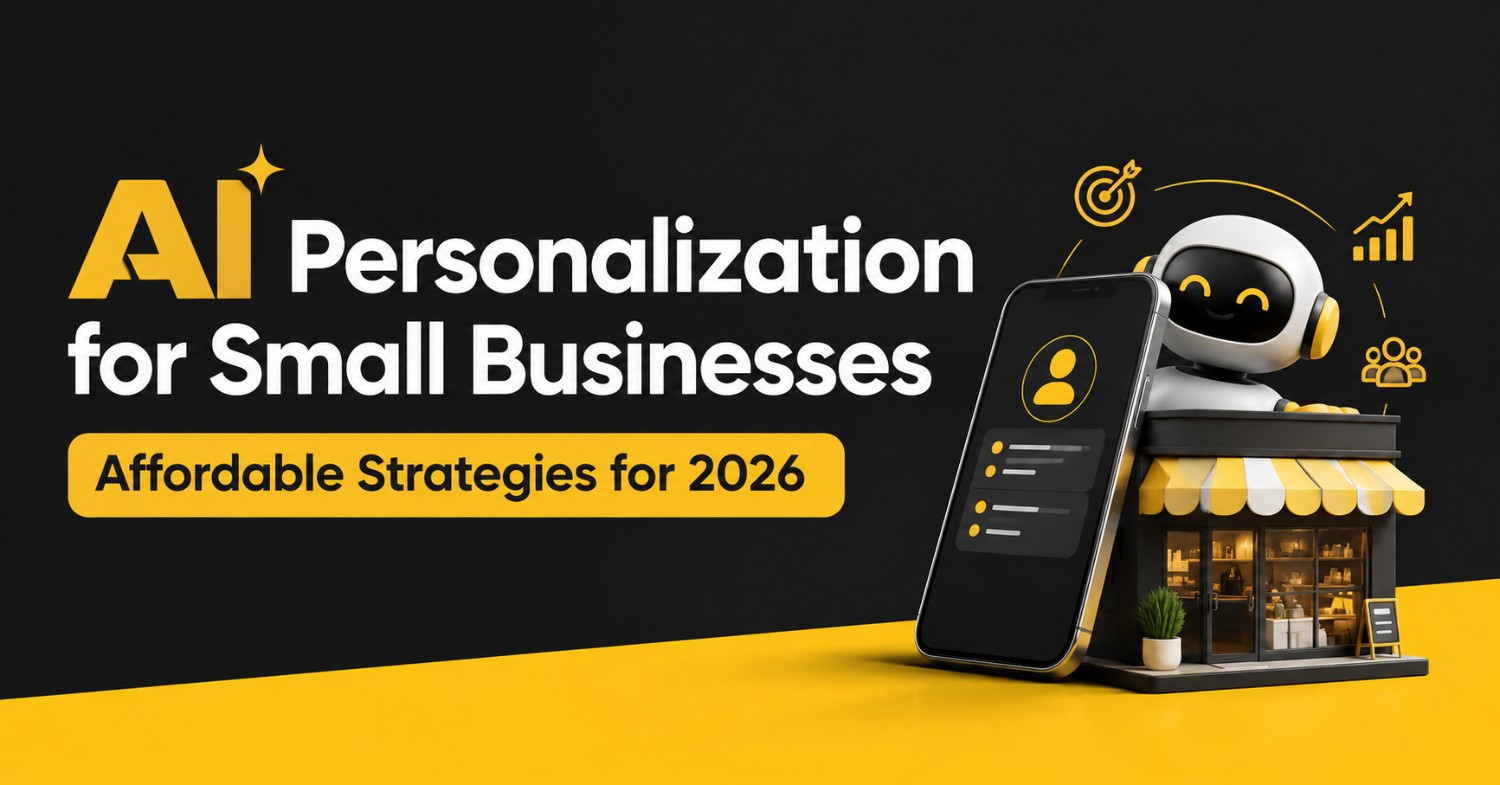
Learn affordable AI personalization strategies for small businesses in 2026, including AI tools, marketing tactics, customer experience and ROI.
Introduction
Customers today expect businesses to understand what they need, what they like, and what information is useful to them. But for many small businesses, traditional personalization can seem expensive, complicated, or difficult to manage.
This is where AI personalization for small businesses becomes useful. AI can help businesses understand customer behaviour, organize audiences, create more relevant messages, recommend products, and deliver personalized experiences without requiring a large marketing team.
The important point is that small businesses don't need an expensive enterprise system to get started. With the right AI marketing strategy, even a limited budget can be used to create more relevant customer experiences.
In this 2026 guide, we'll look at practical and affordable AI personalization strategies, useful tools, budget-friendly implementation methods, and examples for small businesses—including businesses operating in Surat.
What Is AI Personalization for Small Businesses?
AI personalization means using artificial intelligence to make marketing, communication, products, or customer experiences more relevant to individual customers or customer groups.
Traditional marketing often uses the same message for a broad audience. AI-powered personalization can use available information such as browsing behaviour, purchase history, customer interests, interactions, or preferences to help businesses create more relevant experiences.
For example, instead of showing every website visitor the same product recommendation, an ecommerce business could use customer behaviour to highlight products that are more relevant to that visitor.
For a small business, this can mean:
More relevant product recommendations
Personalized email campaigns
Better customer follow-ups
More targeted advertising
Personalized website experiences
Faster customer support
More relevant offers and promotions
The goal isn't to make every customer interaction automated. The goal is to use technology to make marketing more useful, relevant, and customer-focused.
Why AI Personalization Matters for Small Businesses in 2026
Large companies have used personalization for years because they have access to large amounts of customer data and sophisticated marketing systems. AI is changing that equation.
Today, smaller businesses can use AI tools to handle tasks that previously required more time, staff, or expensive technology.
1. Better Customer Experience
Customers are more likely to engage with information that is relevant to their interests. Personalized communication can help businesses avoid sending the same generic message to everyone.
2. More Relevant Marketing
AI marketing for small businesses can help create different messages for different customer segments. A new customer, repeat buyer, and inactive customer don't necessarily need the same offer.
3. Less Manual Work
AI can assist with customer segmentation, content variations, recommendations, and follow-up workflows, allowing small teams to spend more time on strategy and customer relationships.
4. Better Use of Marketing Budgets
Instead of increasing spending everywhere, businesses can use customer data to focus marketing efforts on audiences and messages that are more likely to be relevant.
5. Scalable Personalization
One of the biggest advantages of AI-powered personalization is scalability. A small business can start with one simple use case and gradually expand as it learns what works.
Can Small Businesses Afford AI Personalization?
Yes. AI personalization on a budget is possible when businesses start with the right priorities.
The biggest mistake is assuming that personalization requires an expensive enterprise platform from day one. It doesn't.
A small business can begin with simple AI-assisted workflows and increase its investment only after seeing useful results.
₹0–₹2,000 per Month: Starter Approach
At this level, businesses can focus on simple AI-assisted activities such as:
Creating customer-specific content variations
Segmenting basic customer groups
Writing personalized email messages
Generating product or service recommendations manually with AI assistance
Improving customer follow-up messages
The goal at this stage is learning and testing, not complete automation.
₹2,000–₹10,000 per Month: Growing Business
A growing business can start connecting more tools and channels.
Possible activities include:
Email personalization
Customer segmentation
AI-assisted customer support
Personalized website content
Automated follow-ups
Product recommendations
More targeted advertising
At this stage, businesses should track results carefully before adding more tools.
₹10,000+ per Month: Advanced Personalization
Businesses with larger customer volumes may consider more advanced platforms, automation, analytics, recommendation systems, and customer data integrations.
However, spending more doesn't automatically mean better personalization.
The right strategy is more important than the size of the technology budget.
7 Affordable AI Personalization Strategies for Small Businesses
1. Personalize Email Marketing
Email is one of the simplest places to introduce personalized marketing.
Instead of sending the same campaign to your entire database, divide customers into meaningful groups.
For example:
New customers
Repeat customers
Customers who haven't purchased recently
Customers interested in a particular category
High-value customers
AI can help create different subject lines, messages, product suggestions, and follow-up content for these groups.
A clothing business, for example, could send different recommendations to customers interested in ethnic wear compared with customers who regularly purchase casual clothing.
2. Create Personalized Website Experiences
Your website doesn't have to provide exactly the same experience to every visitor.
Based on available customer behaviour, businesses can make content more relevant by highlighting:
Relevant products
Frequently viewed categories
Related services
Helpful content
Special offers
Recommended products
For a small ecommerce business, even a simple recommendation section can be a useful starting point.
The key is to start with one personalization feature, test it, and improve it rather than trying to personalize the entire website immediately.
3. Use AI for Product Recommendations
AI customer personalization can be especially useful for businesses selling multiple products or services.
Imagine a customer visits a jewellery website and spends time exploring earrings. Instead of showing completely unrelated products, the business can recommend complementary jewellery categories or similar designs.
The same approach can work for:
Fashion stores
Jewellery businesses
D2C brands
Electronics retailers
Home decor businesses
Beauty businesses
The recommendation should provide genuine value rather than simply trying to push another sale.
4. Personalize WhatsApp and Customer Follow-Ups
For many small businesses, customer communication happens through WhatsApp or direct conversations.
AI can help businesses organize and personalize follow-ups based on customer context.
For example, instead of sending:
“Hello, check out our latest products!”
A business could create a more relevant message based on the customer's previous enquiry or purchase.
This can be especially useful for local businesses where customer relationships and repeat purchases matter.
5. Use AI to Personalize Advertising
Running the same advertisement for every audience can limit relevance.
With an AI marketing strategy, businesses can test different messages for different customer groups.
For example:
New customer:
Focus on introduction, trust, and first purchase.
Returning customer:
Focus on new products or relevant recommendations.
Inactive customer:
Focus on re-engagement.
AI can assist with generating and testing creative variations, but businesses should still review the messaging, targeting, and results themselves.
6. Choose the Right AI Tools for Small Business Personalization
You don't need dozens of AI tools for small businesses to build a personalization system. Start with the specific customer problem you want to solve and then choose a tool that supports that task.
Depending on your business, you may need tools for:
AI content creation — personalized emails, messages, and marketing copy
Email marketing — audience segmentation and personalized campaigns
Customer support — AI-assisted replies and chatbots
Website personalization — relevant content, offers, and recommendations
Analytics — understanding customer behaviour and campaign performance
Advertising — testing different messages and creative variations
For a small business, the better approach is to start with one or two practical use cases instead of paying for a large collection of AI platforms.
7. How to Use AI Personalization on a Small Business Budget
A practical implementation doesn't need to be complicated. Follow a simple process and expand only when the first use case starts producing useful results.
Step 1: Identify One Customer Problem
Don't begin by asking, “Where can we use AI?”
Instead, ask:
“Where are our customers receiving the same generic experience?”
This could be email, WhatsApp, product recommendations, website content, or follow-ups.
Step 2: Use the Customer Data You Already Have
Small businesses often already have useful information through:
Previous purchases
Customer enquiries
Website activity
Email interactions
Product preferences
Customer feedback
Use only the information that is appropriate and necessary for the personalization experience.
Step 3: Create Simple Customer Segments
You don't need hundreds of segments.
Start with groups such as:
New Customers → Returning Customers → Interested Customers → Inactive Customers
Then create different messages or experiences for each group.
Step 4: Start With One Channel
Choose the channel where your customers are already active.
For one business, that might be email. For another, it could be WhatsApp, a website, or advertising.
Starting small makes it easier to understand what is actually working.
Step 5: Test Different Experiences
Create two or more versions of your message, recommendation, offer, or content.
Then compare the results.
This turns AI personalization into a measurable marketing activity instead of simply adding AI because it is a current trend.
Step 6: Measure the Results
Track relevant metrics such as conversion rate, engagement, repeat purchases, or customer response.
If personalization isn't improving the customer experience or business results, change the approach.
Step 7: Scale What Works
Once one personalization workflow produces consistent results, apply the same learning to another channel.
Start small → Test → Measure → Improve → Scale.
AI Personalization Examples for Small Businesses
The best way to understand AI personalization for small businesses is through real-world examples.
Jewellery Business
A jewellery business can recommend products based on the categories a customer previously viewed or purchased.
For example, someone interested in earrings could receive recommendations for matching necklaces or similar designs.
Fashion & Textile Business
A fashion retailer can use customer preferences to suggest relevant styles, categories, or collections instead of showing the same products to every customer.
This can be particularly useful for businesses competing in a large local market such as Surat.
Restaurant
A restaurant can use previous order behaviour to create more relevant promotions.
A customer who regularly orders a particular category could receive information about related dishes or suitable offers.
Salon
A salon can personalize reminders and promotions based on customer history, previous services, or likely follow-up timing.
D2C Business
A D2C brand can use browsing and purchase behaviour to recommend related products, create personalized email campaigns, and re-engage customers who haven't purchased recently.
Local Service Business
A service business can personalize follow-up messages based on the customer's previous enquiry instead of sending the same generic message to every lead.
AI Personalization for Businesses in Surat
For AI personalization for businesses in Surat, the biggest opportunity is not simply using advanced technology. It is using customer information to create more relevant local experiences.
Surat has businesses across jewellery, textiles, fashion, food, retail, real estate, education, beauty, and professional services. Each category can use personalization differently.
For example:
Jewellery businesses can recommend products based on customer interests.
Textile and fashion businesses can personalize collection recommendations.
Restaurants can create relevant offers for repeat customers.
Real estate businesses can recommend properties based on customer requirements.
Education businesses can personalize follow-ups based on course interests.
Local service businesses can create more relevant lead follow-ups.
A digital marketing strategy for small businesses in Surat can combine AI personalization with content, advertising, customer communication, and local visibility.
The important principle is simple:
Use AI to make the customer experience more relevant—not simply more automated.
How to Measure AI Personalization ROI
Affordable personalization only makes sense when it contributes to measurable business outcomes.
Depending on your business model, track:
Conversion rate
Click-through rate
Customer engagement
Repeat purchases
Average order value
Customer retention
Cost per conversion
For example, if a personalized campaign receives more engagement but doesn't generate additional conversions, the strategy may need to be adjusted.
Don't measure success by how many AI tools you have implemented.
Measure whether personalization is helping customers take meaningful actions.
Common AI Personalization Mistakes Small Businesses Should Avoid
AI personalization can create problems when businesses focus more on automation than customer value.
1. Personalizing Everything at Once
Start with one use case instead of trying to automate every customer interaction.
2. Buying Expensive Tools Too Early
Don't invest in advanced platforms before understanding what your customers actually need.
3. Using Poor Customer Data
Bad or outdated information can lead to irrelevant recommendations and messages.
4. Making Personalization Feel Intrusive
Personalization should feel useful, not uncomfortable. Don't use customer information simply because you have access to it.
5. Removing Human Oversight
AI can assist with communication, but important customer interactions may still require human judgment.
6. Ignoring Results
If a personalization campaign isn't producing useful results, test, improve, or stop it.
AI Personalization vs Traditional Marketing
Traditional marketing often communicates one broad message to a large audience. AI personalization allows businesses to create more relevant experiences based on customer information and behaviour.
This doesn't mean traditional marketing is no longer useful.
The strongest AI marketing strategy combines human creativity and business understanding with AI-assisted personalization.
The 2026 Small Business AI Personalization Playbook
Small businesses don't need the most advanced AI system to start.
A practical 2026 playbook looks like this:
1. Start With One Problem
Find one customer experience that feels too generic.
2. Choose One Channel
Start with email, website, WhatsApp, advertising, or another channel where your customers are active.
3. Use Existing Data
Begin with the customer information your business already collects appropriately.
4. Add One AI Solution
Choose an affordable tool that solves the specific problem.
5. Test Before Scaling
Compare personalized and non-personalized experiences.
6. Measure Business Results
Focus on conversions, engagement, retention, and revenue-related outcomes.
7. Scale Gradually
Only increase your technology investment after identifying what works.
The formula is simple:
Right Customer + Right Message + Right Channel + Right Timing + Right Budget
That's what makes affordable AI personalization strategies practical for small businesses.
Grow Your Small Business With Smarter Digital Marketing
AI personalization can help small businesses create better customer experiences without automatically requiring a large technology budget.
But choosing the right tools is only one part of the process. Your AI marketing strategy, content, audience targeting, customer journey, and overall digital presence need to work together.
At Grow Shadow, we help businesses build practical digital marketing strategies around their goals, audience, and budget. Whether you're looking to improve AI personalization, SEO, local visibility, content, or customer acquisition, the focus should always remain on sustainable business growth.
FAQs
1. What is AI personalization for small businesses?
AI personalization for small businesses means using artificial intelligence to create more relevant marketing messages, recommendations, offers, content, or customer experiences based on available customer information and behaviour.
2. Can small businesses afford AI personalization?
Yes. Businesses can start with affordable AI tools and simple workflows instead of investing in expensive enterprise platforms. Starting with one use case and scaling based on results can make AI personalization on a budget more practical.
3. How can small businesses use AI for personalization?
Small businesses can use AI for personalized emails, website experiences, product recommendations, customer follow-ups, advertising, customer support, and personalized offers.
4. What are the best AI tools for small business personalization?
The right tools depend on the business goal. Small businesses can consider AI tools for email marketing, content creation, customer support, website personalization, analytics, and advertising rather than choosing tools simply because they are popular.
5. How can Surat businesses use AI personalization?
AI personalization for businesses in Surat can be used across jewellery, textile, fashion, restaurants, real estate, education, retail, beauty, and local services. Businesses can personalize recommendations, offers, follow-ups, content, and customer communication based on relevant customer needs.
Conclusion
AI personalization for small businesses doesn't have to be complicated or expensive. The smartest approach is to start with one customer problem, choose an affordable solution, test the results, and scale gradually.
In 2026, the advantage won't simply belong to businesses using the most AI. It will belong to businesses that use AI thoughtfully to deliver more relevant customer experiences.
Start small. Personalize with purpose. Measure what works. Then scale.
We'd Love to Hear You!
Chat with US
 Send Us Mailinfo@growshadow.com
Call Us
 Call 24/7 Hours+91 70693 32037
Visit Office