




 Product Packaging Design
API Versioning Best Practices for Every Developers in 2026
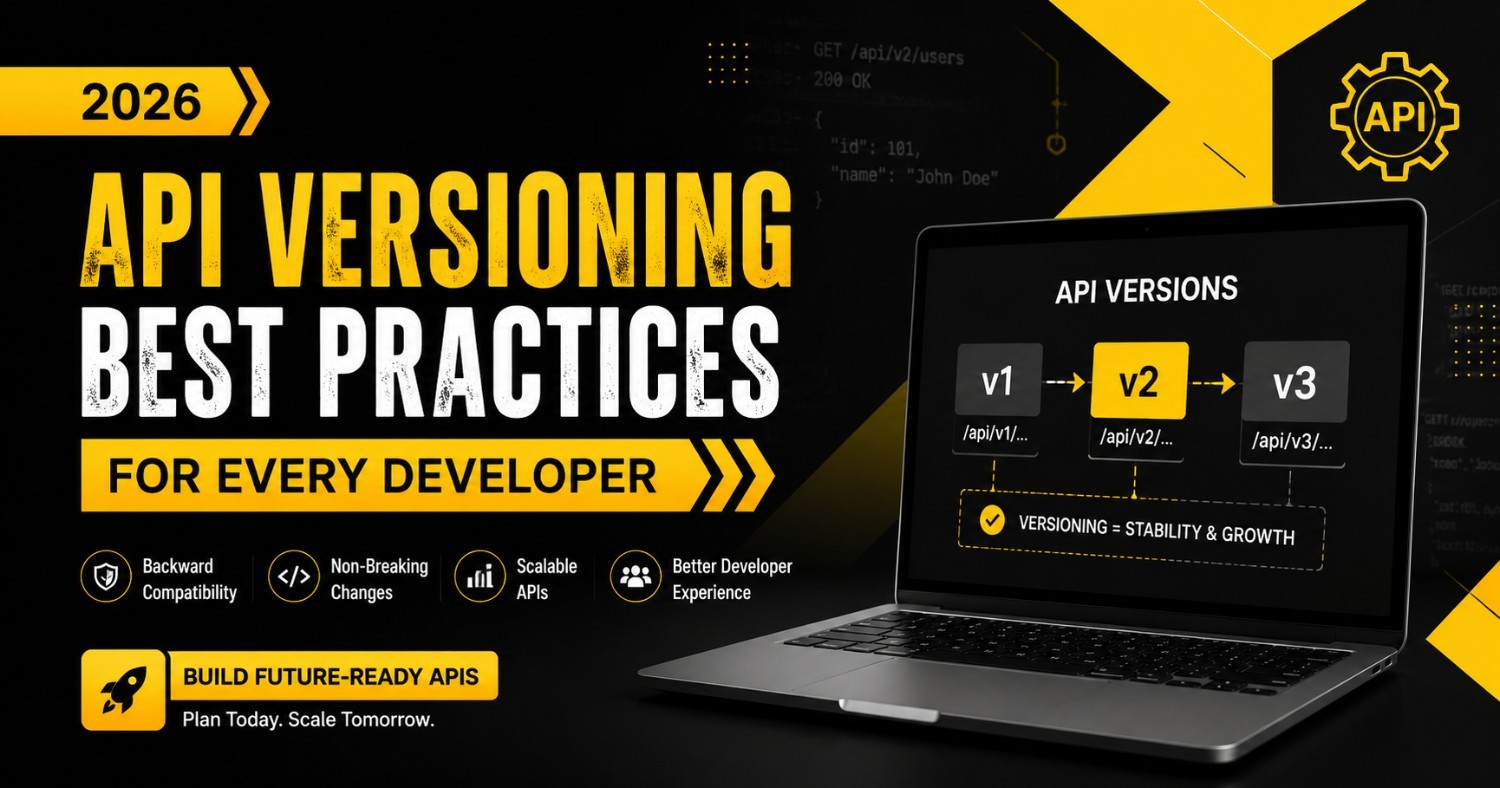
Learn the best API versioning practices in 2026, including REST API versioning, backward compatibility, security, and scalable API development strategies.
Modern applications heavily depend on APIs for communication between mobile apps, websites, cloud platforms, payment systems, CRMs, and enterprise software. As businesses continue building scalable digital products in 2026, maintaining stable and future-ready APIs has become one of the biggest priorities in modern software development.
Without proper API versioning, even small API updates can break applications, disrupt integrations, create security issues, and negatively impact user experience. This is why companies investing in API development, scalable backend systems, and enterprise software now focus heavily on structured API lifecycle management.
Whether you are building SaaS platforms, ecommerce applications, mobile apps, or enterprise systems, understanding API versioning best practices is critical for long-term scalability and stability.
At Grow Shadow – Best IT Solution Company in Surat, we help businesses build scalable and secure digital infrastructures using modern backend development, secure APIs, cloud systems, and performance-focused architecture. As a growing Digital Marketing Company in Surat and web technology partner, we understand how important structured APIs are for business scalability and application performance.
In this guide, you will learn:
What API versioning is
Why versioning matters in 2026
Best REST API versioning methods
Common versioning mistakes
API security practices
Professional versioning examples
Scalable API architecture strategies
What is API Versioning?
API versioning is the process of managing changes in APIs without breaking existing applications or integrations. It allows developers to update APIs while maintaining support for older versions used by clients, applications, or third-party systems.
For example:
Mobile applications
Payment gateways
Ecommerce systems
CRM integrations
SaaS dashboards
often depend on stable APIs for communication.
Without proper version management, even a small API update can break functionality for thousands of users.
Modern Web API development requires stable versioning systems because applications are now more interconnected than ever before.
Why API Versioning Matters in 2026
In 2026, software systems are becoming increasingly distributed. Businesses now operate:
Cloud-based applications
Mobile ecosystems
Multi-platform integrations
AI-driven systems
Real-time services
Because of this, APIs continuously evolve.
Proper REST API versioning helps businesses:
Maintain backward compatibility
Reduce downtime
Improve API scalability
Prevent integration failures
Enhance developer experience
Improve API security
Support long-term product growth
Without proper API management, scaling modern applications becomes extremely difficult.
Common REST API Versioning Methods

There are multiple ways developers implement versioning in APIs. Each method has different advantages depending on scalability, architecture, and business requirements.
URI Versioning
URI versioning is one of the most common methods.
Example:
https://api.example.com/v1/users
Updated version:
https://api.example.com/v2/users
Advantages:
Easy to understand
Simple implementation
Developer-friendly
Disadvantages:
URLs change frequently
Multiple endpoints increase maintenance complexity
URI versioning remains widely used in API development because of its simplicity.
Header Versioning
Header versioning stores API version information inside request headers.
Example:
Accept: application/vnd.company.v2+json
Advantages:
Cleaner URLs
Better REST architecture
Disadvantages:
Harder for beginners
More debugging complexity
Large enterprise systems often prefer this method for advanced API architecture.
Query Parameter Versioning
This method passes version information through query parameters.
Example:
https://api.example.com/users?version=v2
Advantages:
Easy testing
Flexible implementation
Disadvantages:
Less clean architecture
SEO and caching limitations
This approach is less preferred for enterprise-grade systems in 2026.
API Versioning Best Practices Every Developer Must Follow

Proper versioning is not only about creating v1 or v2 endpoints. It is about designing scalable systems that remain stable for years.
Maintain Backward Compatibility
One of the most important API versioning best practices is maintaining backward compatibility.
Older applications should continue functioning even after API updates.
Bad API changes include:
Removing existing fields
Changing response structures
Renaming endpoints
Modifying authentication unexpectedly
Instead:
Add new optional fields
Introduce new endpoints gradually
Provide migration timelines
This improves long-term API scalability.
Use Semantic Versioning
Semantic versioning improves API clarity.
Structure:
MAJOR.MINOR.PATCH
Example:
v2.1.4
Meaning:
MAJOR → breaking changes
MINOR → new features
PATCH → bug fixes
This makes API management easier for developers and businesses.
Secure APIs Properly
Modern API security is critical in 2026 because APIs are primary attack targets.
Businesses should:
Use authentication tokens
Implement OAuth 2.0
Validate requests
Apply rate limiting
Monitor suspicious activity
Secure API Authentication Example
const jwt = require('jsonwebtoken');
function authenticateToken(req, res, next) {
const token = req.headers['authorization'];
if (!token) {
return res.sendStatus(401);
}
jwt.verify(token, process.env.ACCESS_TOKEN_SECRET, (err, user) => {
if (err) {
return res.sendStatus(403);
}
req.user = user;
next();
});
}
This protects APIs from unauthorized access and improves application security.
Avoid Common API Versioning Mistakes
Many developers create unstable APIs because of poor planning.
Common mistakes include:
No documentation
Breaking changes without warnings
Poor testing
Weak authentication
Unclear API lifecycle management
These issues create long-term scalability problems.
Professional API development requires structured planning from the beginning.
API Documentation is Critical
Good documentation improves:
Developer experience
Faster integrations
Reduced support requests
Better API adoption
Modern tools for API documentation include:
Swagger
Postman
OpenAPI Specification
These tools simplify enterprise-level Web API development.
Example OpenAPI YAML Structure
openapi: 3.0.0
info:
title: User API
version: 1.0.0
paths:
/users:
get:
summary: Get users list
Structured API documentation is now a standard requirement for scalable backend systems.
API Testing and Monitoring
Testing APIs regularly helps identify:
Performance issues
Security vulnerabilities
Downtime risks
Integration failures
Developers should implement:
Automated testing
Load testing
Security testing
Response validation
Modern API ecosystems require continuous monitoring for stability and performance optimization.
API Scalability in Modern Applications

As businesses grow, APIs must handle:
Increased traffic
Multiple applications
Cloud systems
Third-party integrations
Mobile users
This is where API scalability becomes critical.
Scalable APIs should:
Use caching
Optimize database queries
Implement rate limiting
Support asynchronous processing
Professional backend systems are designed for future scaling from day one.
How Grow Shadow Builds Scalable API Systems

At Grow Shadow – Best IT Solution Company in Surat, we build scalable and secure APIs for:
Ecommerce platforms
SaaS products
Business dashboards
Mobile applications
Enterprise systems
Our development process focuses on:
Secure API architecture
High-performance backend systems
API scalability
Cloud integration
Modern web technologies
Cybersecurity implementation
As a growing Digital Marketing Company in Surat, we also help businesses combine technical infrastructure with digital growth strategies for long-term online success.
Businesses searching for:
API development services
Secure backend systems
Web API development
Enterprise application development
can significantly improve scalability and system stability with structured API architecture.
At Grow Shadow – IT & Marketing Solution Company, we help businesses build scalable APIs, secure backend systems, and high-performance web applications using modern development standards. As a growing Best IT Solution Company in Surat and Best Digital Marketing Company in Surat, our focus is on creating future-ready digital solutions that combine security, scalability, and business growth.
Future of API Versioning in 2026
Modern APIs are evolving rapidly with:
AI systems
Microservices
Serverless computing
Cloud-native applications
Because of this, versioning strategies are becoming even more important.
Future-ready APIs should focus on:
Flexibility
Security
Scalability
Automation
Developer experience
Businesses investing in scalable APIs today will adapt faster to future technologies.
Conclusion
In 2026, API versioning is no longer just a technical feature — it is a core part of scalable software architecture. Poor version management can break applications, damage integrations, and create long-term maintenance challenges.
Following proper API versioning best practices helps businesses:
Maintain stable systems
Improve developer experience
Enhance API security
Support future scalability
Reduce downtime
Modern REST API versioning strategies combined with strong documentation, authentication, monitoring, and structured architecture create reliable and scalable digital systems.
As applications continue becoming more interconnected, businesses must invest in secure and scalable API infrastructures to remain competitive in the modern digital ecosystem.
We'd Love to Hear You!
Chat with US
 Send Us Mailinfo@growshadow.com
Call Us
 Call 24/7 Hours+91 70693 32037
Visit Office